
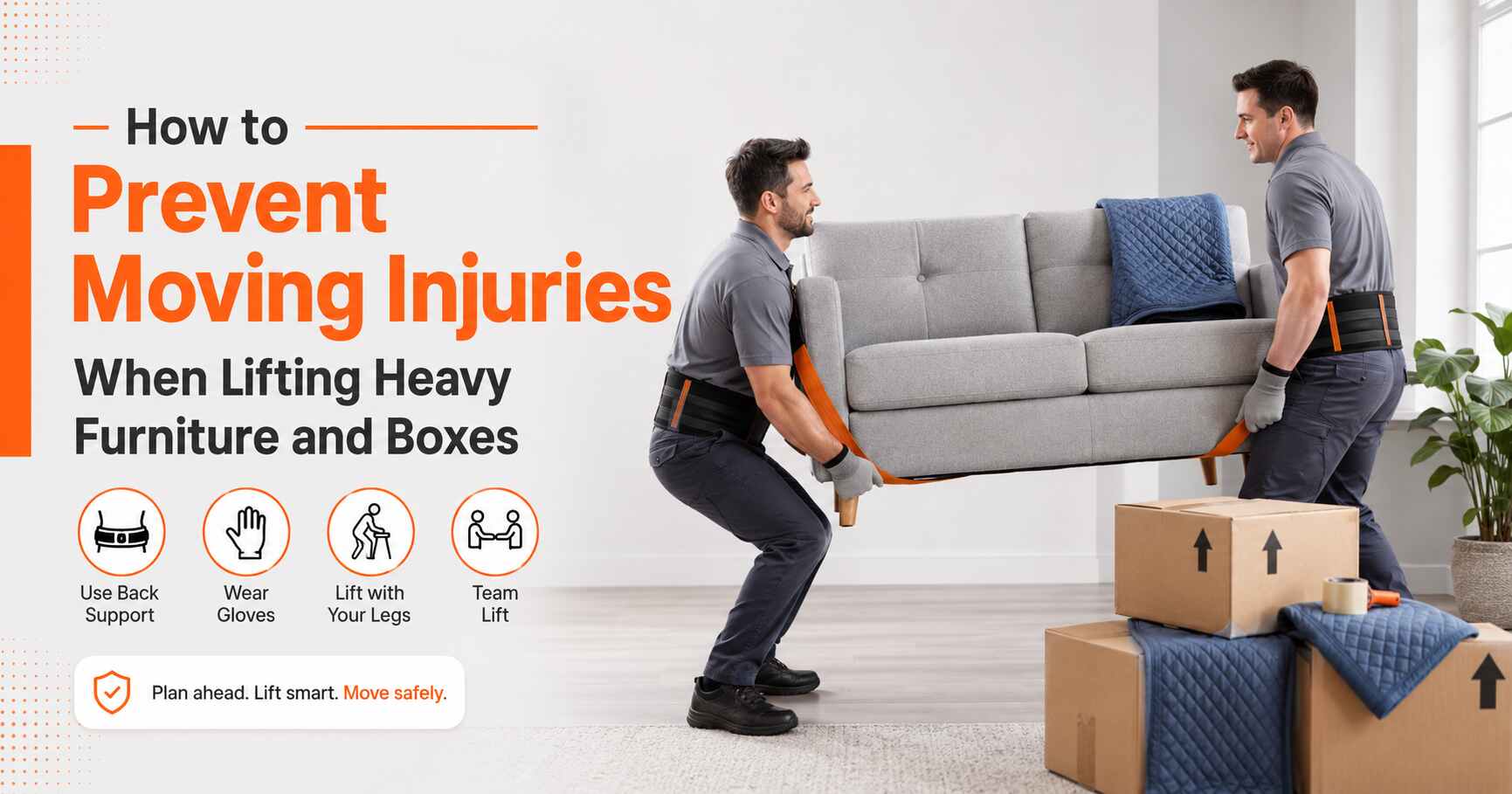
Moving heavy furniture and boxes is one of the most physically demanding tasks you’ll ever take on and one of the most injury-prone. Back strains, twisted ankles, smashed fingers, and pulled muscles are all common on moving day, especially when people rush or skip the basics.
The good news? Knowing how to prevent moving injuries when lifting heavy furniture and boxes comes down to preparation, technique, and the right tools. Follow these proven steps, and you’ll make it through moving day without a trip to urgent care.
Whether you’re moving a studio apartment in Oakland or a three-bedroom home in San Jose, these tips apply to every move, big or small. And if the job feels too big to handle safely on your own, Yak & Yeti Movers is here to help.
Plan Your Move Before You Touch a Single Box
Most moving injuries don’t happen because people are weak. They happen because people are rushed. When you’re scrambling to beat a deadline, you skip breaks, overload boxes, and ignore pain signals your body is sending.
Start planning as early as possible. Once you have a moving date, build a simple timeline: when to start packing, when to arrange help, and what needs to be done the night before. The less pressure you’re under on moving day, the more carefully and safely you’ll move.
Map Out Your Moving Route
Before you lift anything, walk the route from each room to the moving truck. Check for narrow hallways, low ceilings, tight stairwells, and uneven flooring. Measure oversized furniture against doorframes so you’re not wrestling a king-size bed frame through a 30-inch opening mid-move.
Remove obstacles early loose rugs, extension cords, kids’ toys, and pet items. Keep pets and children in a safe, separate space so they’re not underfoot during the heavy lifting.
Prepare Your Body for the Physical Work
Moving is a full-body workout, and you should treat it like one. A few simple steps in the days and hours before moving day can significantly reduce your risk of injury.
In the week leading up to your move, do light core exercises, planks, bodyweight squats, and gentle stretches. This helps condition the muscles you’ll rely on most: your lower back, legs, and core.
Warm Up Before You Start Lifting
On moving day, never start cold. Take 5–10 minutes to walk briskly, rotate your hips and shoulders, and do some light stretching. Hold each stretch for about 30 seconds without bouncing. Focus on your hamstrings, lower back, and shoulders the areas most likely to be strained when lifting heavy items.
Stop any stretch if you feel pain. The goal is to loosen up, not push your limits before the day even starts.
Fuel Up and Stay Hydrated
Eat a high-protein breakfast before you begin. Eggs, oatmeal, or avocado toast are solid choices. Dehydration and low blood sugar increase fatigue and make injuries more likely. Keep water and snacks like fruit and protein bars accessible throughout the day, and take an actual lunch break. Moving on an empty tank is a fast path to mistakes.
Use Proper Lifting Technique Every Single Time
This is the most important thing on this list. Poor lifting form is the number one cause of back injuries during a move.
Here’s the correct approach:
- Stand close to the item before you lift — the farther it is from your body, the more strain on your spine.
- Feet shoulder-width apart for a stable base.
- Bend at the knees, not the waist. Squat down and keep your back straight.
- Engage your core before you lift. Think of bracing like you’re about to take a punch.
- Drive up through your legs — your legs should be doing the work, not your back.
- Hold the item close to your chest as you move. Keeping the load near your center of gravity reduces strain dramatically.
- Never twist while lifting. If you need to turn, move your feet instead of rotating your torso.
How to Carry Heavy Items Through Your Home
Always walk forward or backward, not sideways. Moving sideways with a heavy load twists your lower back and puts unnecessary pressure on your spine. Carry items at a comfortable height with your arms slightly bent, and take slow, deliberate steps.
Pack Smart to Reduce Box Weight
Heavy boxes cause just as many injuries as heavy furniture. A common mistake is filling large boxes with dense items like books, tools, or kitchen appliances. The box might hold it all, but that doesn’t mean you should lift it.
Follow this simple rule: Heavy items go in small boxes. Lighter, bulky items go in large boxes.
Aim to keep each box under 40 lbs. If you have a history of back or knee problems, keep boxes to 30–35 lbs. maximum. If a box feels too heavy to lift comfortably, unpack some of it.
Also, wrap sharp or pointed items in packing paper before boxing them. A blade or corner poking through cardboard can catch your hand mid-lift and cause a nasty cut.
Use the Right Moving Equipment
You don’t have to carry everything by hand. The right equipment can cut the physical strain of moving in half.
Furniture dolly: Ideal for heavy boxes and large furniture. It rolls the weight instead of making you carry it. Make sure the item is secured before you start moving.
Appliance dolly: Built for heavy appliances like refrigerators, washers, and dryers. These have straps and reinforced frames to handle serious weight.
Stair-climbing dolly: If your move involves stairs, this specialized dolly makes moving bulky items up and down far safer and easier.
Furniture sliders: Place these under the legs of heavy furniture to glide it across hardwood, tile, or carpet with minimal effort. They’re especially helpful when repositioning furniture in the new home.
Moving straps and shoulder dollies: These distribute the weight of heavy items across your shoulders and hips rather than concentrating it in your arms and lower back.
Read the instructions or watch a video before using any equipment on moving day. Using a dolly incorrectly can be just as dangerous as not using one at all.
Disassemble Large Furniture Before Moving
Large, assembled furniture is harder to grip, harder to maneuver, and more likely to cause injury. Whenever possible, break it down first.
Remove drawers from dressers, detach legs from sofas and tables, and disassemble bed frames. This reduces both the size and the weight of each piece, making it much easier to carry safely through doorways and down stairs.
Put all screws, bolts, and small hardware into a labeled ziplock bag and tape it directly to the furniture. You’ll thank yourself when it’s time to reassemble.
Dress Appropriately for Moving Day
What you wear matters more than most people think. Here’s what to keep in mind:
- Footwear: Wear sturdy, closed-toe shoes, ideally boots with ankle support. Never move in sandals, flip-flops, or heels. If something heavy lands on your foot, you’ll want that protection.
- Clothing: Choose fitted, flexible clothes. Loose, baggy clothing can catch on furniture edges or cause you to trip. Long sleeves and pants reduce the risk of cuts and scrapes.
- Gloves: Work gloves improve your grip and protect your hands from sharp corners and rough surfaces.
- Protective gear: If you have a known back or knee issue, wear a brace. It’s a simple precaution that can prevent a serious setback.
Wrap and Protect Furniture to Protect Yourself Too
Use moving blankets, bubble wrap, or packing paper to shield fragile items. For furniture, especially pieces with sharp corners or delicate finishes, wrap them up securely to prevent scratches, dents, or dings.
Beyond protecting your belongings, wrapped furniture is also safer to carry. Padding removes sharp edges that could catch your hands or scrape your arms while you’re navigating tight hallways or stairs. It also provides a better grip in some cases, especially with smooth-surfaced furniture.
Know Your Limits And Respect Them
One of the biggest causes of moving injuries is ignoring the body’s signals. If something feels too heavy, it is. If you’re exhausted and your form is breaking down, stop.
Decide beforehand how much you can realistically lift and for how long. Then stick to it. Take breaks every hour, rehydrate, and check in with yourself physically. Moving the entire house in one go is never worth a herniated disc.
Ask for Help Or Hire Professional Movers
Trying to do a full move alone is one of the riskier decisions you can make. You’ll underestimate how long it takes, skip breaks because you’re pressed for time, and push through pain because there’s no one else to handle it.
Bring in friends and family if you can. A team of two to four people makes the whole process faster and significantly safer. But keep in mind your family members aren’t trained movers. If you have especially heavy pieces like pianos, large safes, antique furniture, or major appliances, the safest call is to hire professionals.
At Yak & Yeti Movers, our Bay Area moving team is trained in proper lifting techniques, equipped with professional moving tools, and experienced in safely handling everything from studio apartments to full commercial office moves. We serve San Francisco, San Jose, Oakland, Fremont, Berkeley, and across the Bay Area.
Let us do the heavy lifting so you don’t have to risk your health doing it yourself. Get a free quote today.
Conclusion
Moving day doesn’t have to mean aching for a week afterward. By planning ahead, warming up your body, using proper lifting technique, packing smart, and having the right equipment on hand, you can prevent the most common moving injuries before they happen.
FAQs
1. What is the most common injury when moving heavy furniture?
Lower back strains are the most common, usually caused by bending at the waist instead of the knees or twisting while holding a heavy load. Smashed fingers, twisted ankles, and shoulder strains are also frequent.
2. How heavy should a moving box be to avoid injury?
Keep boxes under 40 lbs. If you have a history of back or knee issues, stay at 30–35 lbs. Always put heavy items like books in smaller boxes, never large ones.
3. What moving equipment helps prevent back injuries?
A furniture dolly, appliance dolly, furniture sliders, and moving straps are the most effective. They shift the weight off your back and arms, significantly reducing strain during heavy lifts.
4. Should I stretch before moving heavy boxes and furniture?
Yes. A 5–10 minute warm-up followed by stretches for your lower back, hamstrings, and shoulders reduces the risk of muscle strains. Hold each stretch for 30 seconds and stop before you feel pain.
5. When should I hire professional movers instead of doing it myself?
Hire professionals when moving pianos, heavy appliances, large safes, or antique furniture, or if you have a pre-existing back or knee condition. It’s cheaper than an injury.