
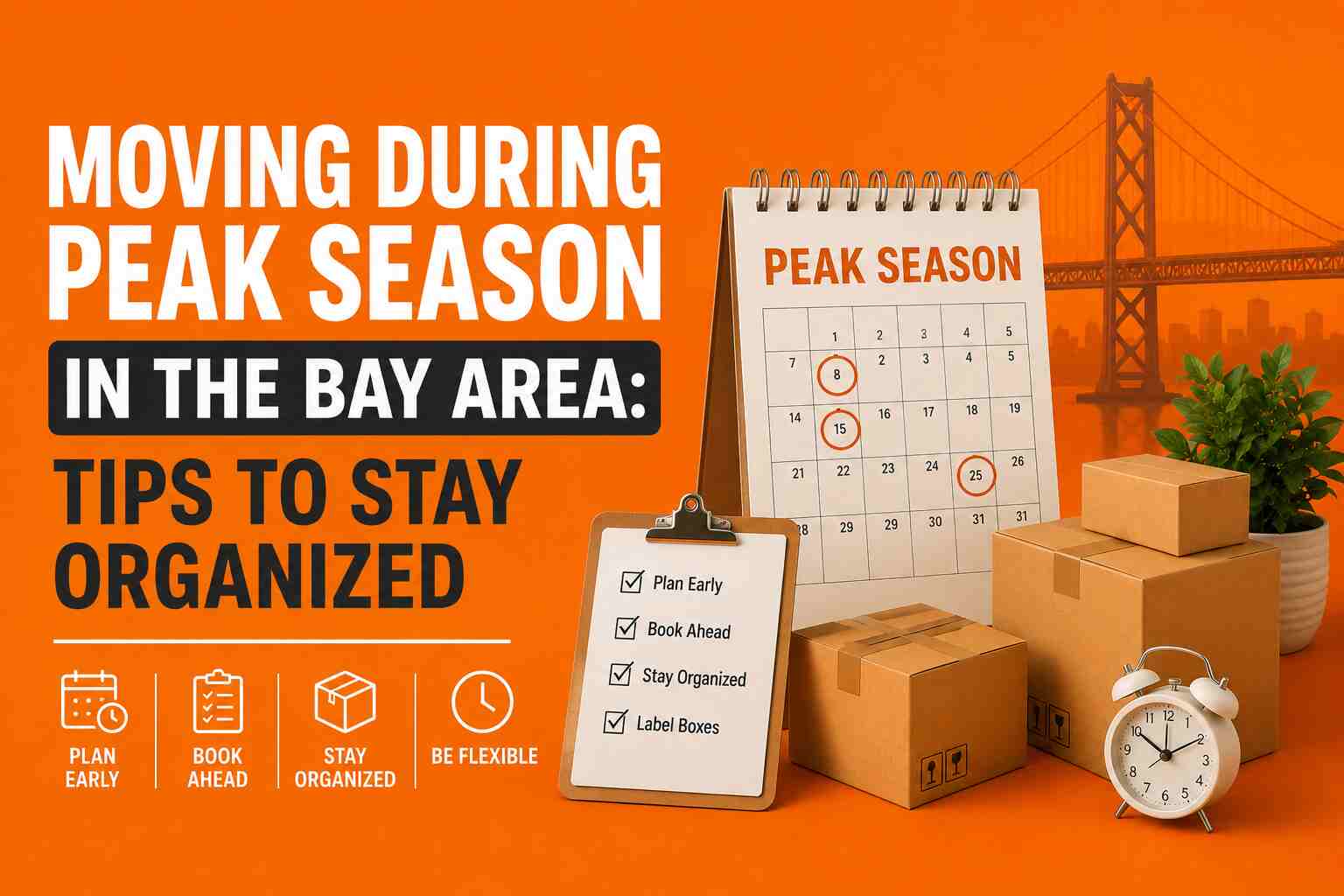
Moving during peak moving season in the Bay Area is rarely simple, especially when everything from movers to trucks gets booked out weeks in advance. The combination of higher demand, tight schedules, and busy summer conditions can quickly turn relocation into a stressful process if it’s not planned properly. That’s why understanding how to manage the peak season moving period is important if you want a smooth and organized experience.
Summer months are the busiest time for relocations across San Francisco, San Jose, and nearby cities in the Bay Area, making it the true moving season rush. Families, professionals, and students all tend to move at the same time, which increases competition for moving services and drives up costs. Without a clear plan, even a short-distance move can feel rushed and overwhelming.
In this guide, you’ll find practical, easy-to-follow tips to help you stay ahead during the busiest time of the year. From booking movers at the right time to avoiding common mistakes and planning around traffic, these insights will help you stay organized and in control throughout your move in the Bay Area.
What Is Peak Moving Season in the Bay Area?
Peak moving season in the Bay Area generally runs from May to September, with the highest demand occurring in June, July, and August. This is the period when most relocations take place, making it the busiest time for moving companies.
Several factors contribute to this seasonal spike. Families prefer summer breaks to avoid school disruptions, many rental leases end during this time, and job changes, especially in the tech industry, often align with mid-year transitions. On top of that, better weather conditions make summer the preferred moving season compared to winter.
Because of this demand surge, movers and trucks get booked weeks or even months in advance. Companies like Yak and Yeti Movers recommend planning early to secure better availability, flexible scheduling, and more reasonable pricing.
Why Peak Season Moving Feels More Stressful in Bay Area?
Moving during peak season in the Bay Area can feel overwhelming because several challenges come together at the same time:
- Moving costs usually increase due to high demand
- Availability of professional movers becomes very limited
- Heavy traffic across Bay Area cities causes delays
- Strict schedules for elevators, parking, and loading zones add pressure
- Last-minute planning often leads to fewer options and rushed decisions
When these factors overlap, the moving process naturally becomes more stressful and harder to manage smoothly.
How to Stay Organized During Peak Moving Season: 6 Practical Tips
Staying organized during peak moving season in the Bay Area requires more than just packing boxes; it takes proper planning, smart timing, and attention to small details.
With high demand for movers, tighter schedules, and busy summer conditions, having a clear plan in place can help you avoid stress and last-minute issues.
1. Book Movers Early (At Least 6–8 Weeks Ahead)
One of the most important steps during peak moving season is booking your movers well in advance. In the Bay Area, reliable moving companies get reserved quickly, especially during the summer.
Booking early helps you secure:
- Better pricing options
- Your preferred moving date
- A more relaxed moving experience closer to the actual day
Companies like Yak and Yeti Movers often see high demand during this time, so early scheduling ensures everything is properly planned and coordinated without last-minute stress.
2. Choose Mid-Week and Mid-Month Dates
The timing of your move can significantly impact both cost and convenience. Peak moving season is busiest on weekends and at the beginning or end of the month.
To avoid delays and higher costs, try to:
- Avoid weekends, month-end dates, and public holidays like Independence Day
- Prefer Tuesday to Thursday moves
- Opt for mid-month scheduling when demand is lower
These time slots are usually more flexible, less crowded, and easier to book during peak season.
3. Declutter Before You Pack
Before packing, it’s important to reduce the number of items you plan to move. The more you carry, the more time, effort, and money it takes.
You can simplify your move by:
- Donating clothes, furniture, or items you no longer use
- Selling or recycling things that are not needed
- Separating essential items from non-essential ones
This not only lowers moving costs but also makes unpacking faster and more organized once you reach your new home.
4. Pack Smart and Label Everything Clearly
Proper packing plays a key role in keeping your move organized and stress-free. Without a clear system, unpacking can become confusing and time-consuming.
To stay organized:
- Label every box by room
- Use color coding for quicker identification
- Keep fragile items packed separately and securely
- Prepare a “first-day essentials” box with daily-use items
These small steps make it much easier to settle in quickly after your move.
Learn more about professional packing support here: Packing and Unpacking Services in the Bay Area
5. Plan for Heat and Bay Area Traffic
Summer moves in the Bay Area can be tiring due to both weather and road conditions. Planning around these factors helps you stay comfortable and on schedule.
To manage better:
- Start your move early in the morning
- Keep water and light snacks available
- Avoid peak traffic hours in cities like San Francisco and Oakland
- Wear light and comfortable clothing
These simple adjustments can make a noticeable difference during a busy moving day.
6. Secure Parking and Building Access in Advance
Parking and building access rules in the Bay Area can easily slow down your move if not arranged ahead of time. Planning these details early helps avoid unnecessary delays.
Before moving day:
- Reserve loading zones if required by your building or city rules
- Inform building management in advance
- Confirm elevator usage schedules
- Check and secure truck access routes
Taking care of these details early helps ensure a smooth, uninterrupted moving process with fewer surprises on the day of the move.
Common Mistakes to Avoid During Peak Moving Season
During peak moving season in the Bay Area, even small mistakes can lead to unnecessary stress, higher costs, and last-minute confusion.
Being aware of these common errors ahead of time can help you plan better and keep your move on track.
Booking Movers at the Last Minute
One of the most common mistakes is delaying your booking until the final moment. During peak season, most reliable movers get reserved weeks in advance, leaving limited options and higher prices for last-minute bookings.
Underestimating Packing Time
Many people assume packing will take less time than it actually does. Without proper planning, it can lead to rushed packing, missing items, and added stress right before moving day.
Not Comparing Moving Quotes
Skipping the comparison of moving quotes can result in paying more than necessary. Different companies may offer different pricing, services, and availability, so reviewing multiple options helps you make a better decision.
Ignoring Traffic and Travel Delays
Bay Area traffic can significantly impact your moving schedule, especially during busy hours. Not accounting for delays can disrupt timing and create avoidable pressure on moving day.
Forgetting Storage Options if Dates Don’t Align
Sometimes move-out and move-in dates don’t match perfectly. In such cases, overlooking storage solutions can create unnecessary complications and force rushed decisions.
Avoiding these mistakes can significantly reduce stress and cost while making your peak moving season experience much smoother and more manageable.
How Professional Movers Like Yak & Yeti Make Peak Season Moving Easier?
Hiring experienced movers during peak moving season can take a lot of pressure off your shoulders. When demand is high and schedules are tight, having professionals manage the process helps you stay organized and focused on other important tasks. It also reduces the chances of delays or last-minute issues.
A trusted company like Yak and Yeti Movers supports you with efficient packing and careful loading, ensuring your belongings are handled properly from start to finish. Their team is trained to manage fragile items safely, so everything arrives at your new home without unnecessary risk or damage.
They also understand the challenges of moving in the Bay Area, from narrow streets to apartment access and parking restrictions. Even during busy peak season schedules, they focus on on-time execution and smooth coordination. If you’re planning a move this summer, working with experienced professional movers in the Bay Area can help you save time, reduce stress, and make your relocation far more organized from day one.
Conclusion
Moving during the Bay Area’s peak moving season can feel challenging, but with the right planning, it becomes much more manageable. When you understand how the peak season moving period works, you can avoid common delays and stay in control of your timeline from start to finish.
The key is to start early, stay flexible, and follow a clear plan throughout the process. Simple steps like booking movers in advance, choosing the right dates, and avoiding common mistakes can make a big difference in how smoothly your move goes during the busy summer moving season.
With proper preparation and the right support, even a high-demand peak season move can be organized and stress-free. Working with experienced movers like Yak and Yeti Movers can further simplify the process, helping you complete your relocation with less pressure and better efficiency.
FAQs
1. What is peak moving season in the Bay Area?
Peak moving season in the Bay Area runs from May to September, with the highest demand in summer months like June, July, and August.
2. Why is peak season moving more expensive?
Prices increase due to high demand, limited mover availability, and increased competition for trucks and storage units.
3. How early should I book movers during peak moving season?
It’s best to book at least 6–8 weeks in advance, and even earlier for weekends or month-end dates.
4. What is the best time to move during peak season?
Mid-week and mid-month dates are usually the best because they are less busy and more affordable.
5. How can I reduce stress during a summer move?
Start planning early, declutter before packing, label boxes clearly, and avoid peak traffic hours for a smoother experience.
6. Can I move during weekends in peak moving season?
Yes, but weekends are the busiest and most expensive times, so availability is limited and booking early is essential.