
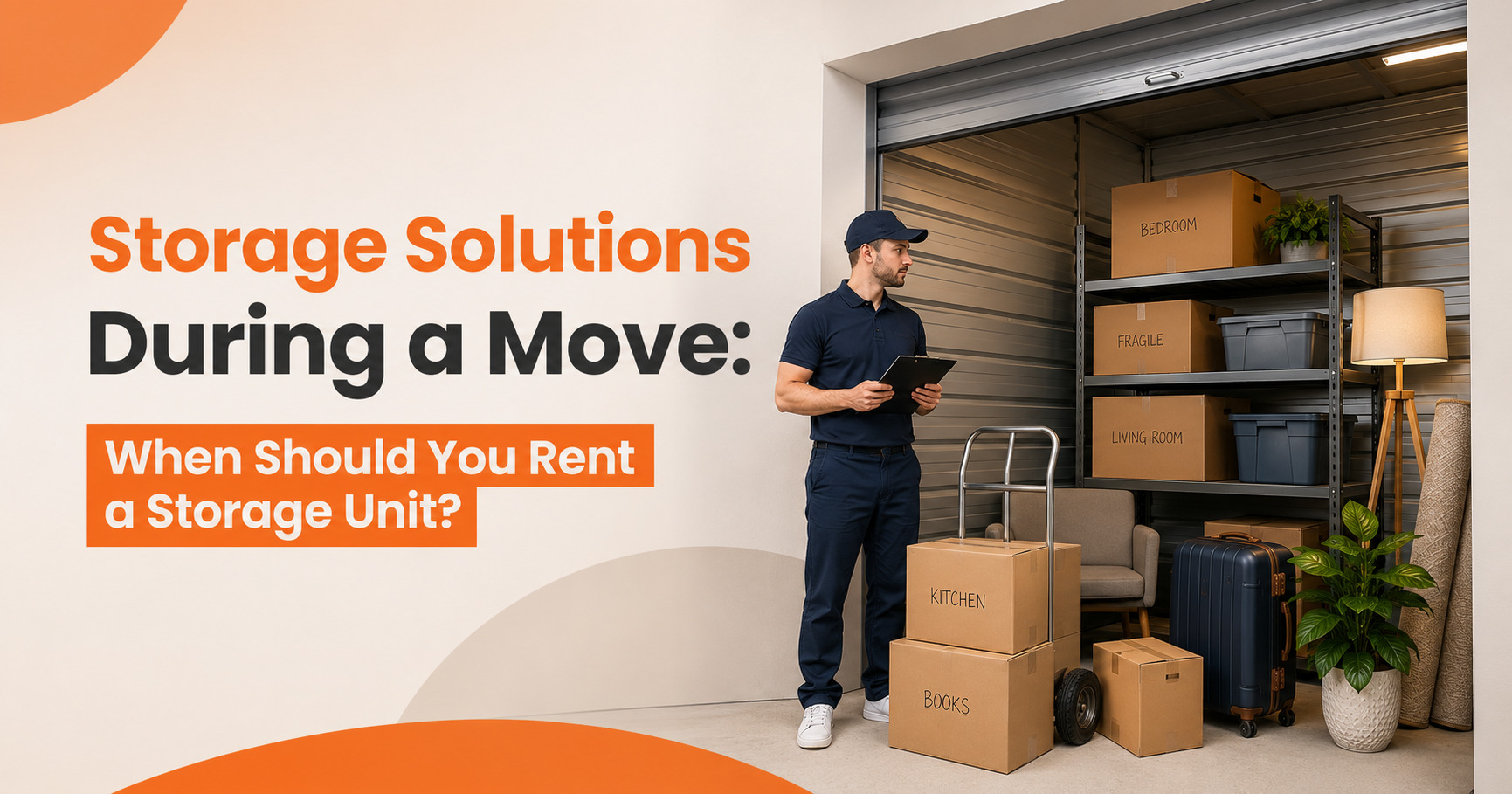
Moving is complicated enough without the added pressure of figuring out what to do with everything you own. Between coordinating move-out dates, finding a new place, and packing up your life, it’s easy to feel like there’s simply no room, literally and figuratively, to get organized.
Renting a storage unit during a move is one of those solutions that sounds like an extra expense until you realize how much time, money, and stress it actually saves you. A temporary self-storage unit gives you the breathing room to move at your own pace instead of scrambling to get everything done in a single chaotic day.
So, when does it actually make sense to rent one? And when can you skip it? This guide walks you through the most common scenarios where a storage unit becomes less of an option and more of a necessity, so you can make the right call before moving day arrives.
What Is a Storage Unit and How Does It Work During a Move?
A storage unit is a rentable, secure space typically at a self-storage facility where you can keep your belongings for a short or long period. During a move, it acts as a buffer: a temporary home for your stuff while you handle the logistics of transitioning between two properties.
Most facilities offer month-to-month rental agreements, a range of unit sizes, and optional features like climate control and 24/7 access. You load your items in, keep them safe, and retrieve them when you’re ready, whether that’s two weeks or two months later.
6 Situations When Renting a Storage Unit Makes Complete Sense
1. Your Move-Out and Move-In Dates Don’t Line Up
This is the most common reason people rent a storage unit during a move, and it happens more often than you’d expect. Your lease ends on the 30th, but your new place isn’t available until the 5th. Or the closing on your new home gets pushed back by a week.
Without a storage unit, you’re stuck paying for extended truck rental fees, crashing with family, or surrounding yourself with boxes in a hotel room. A short-term self-storage rental solves all of that cleanly.
How it works:
- Your moving crew loads your belongings and transfers them to storage
- Items stay secure until your new home is ready
- Movers deliver everything on your confirmed move-in date
This approach also protects you from rushing a move just to beat a deadline. When you’re not racing the clock, you move more carefully, and that means fewer broken items.
2. You’re Staging Your Home for Sale
If you’re selling your current home while coordinating a move, a storage unit can directly impact how fast your home sells and at what price.
Real estate professionals consistently recommend decluttering and depersonalizing a home before listing. Personal collections, oversized furniture, and packed shelves make rooms look smaller and distract buyers from the space itself. A storage unit lets you temporarily remove those items so potential buyers can actually picture themselves living there.
Why this matters financially: A well-staged home typically sells faster and attracts stronger offers. Even one extra month of rental cost is easily offset if your home sells quicker or at a higher price because it showed better.
3. You’re Downsizing and Need Time to Decide
Moving into a smaller home is one of the most common life transitions and one of the most emotionally charged. You can’t always know on moving day which pieces of furniture will work in the new layout, or which belongings you’re truly ready to part with.
Rushing those decisions leads to regret. Renting a storage unit gives you a few months of breathing room to figure out what stays, what gets sold, and what gets donated without doing it all under pressure.
A practical approach: Treat your storage unit as a 60 to 90-day holding zone, not a permanent solution. Set a date to go through everything, decide intentionally, and keep your new home clutter-free from the start.
4. You’re Renovating Before or After the Move
Whether you’re finishing a renovation in your current home before listing it, or you’re moving into a new place that needs work before it’s livable, a storage unit keeps your furniture and belongings safe while the work gets done.
Dust, paint, flooring work, and heavy contractor traffic are hard on furniture. Storing your items off-site during a renovation protects them and gives contractors the open space they need to work efficiently.
This is especially useful when:
- You’re doing a kitchen or bathroom gut renovation
- Floors are being refinished, and rooms need to be completely cleared
- You’re having painting done throughout the home before moving in
In these cases, storage isn’t optional; it’s part of the project plan.
5. You’re Moving Long Distance, and Timing Is Uncertain
Long-distance and interstate moves involve more moving parts than a local relocation. Closing dates shift. Keys get delayed. New leases have strict move-in windows. When you’re coordinating a move across state lines, a local storage unit can serve as a critical safety net.
Rather than shipping everything only to find your new home isn’t ready, you can store your belongings locally, travel ahead to sort out final details, and arrange delivery once everything is confirmed on the other end.
This approach removes the single biggest source of anxiety in long-distance moves: having nowhere to put your things if something falls through at the last minute.
6. You Have Valuables That Shouldn’t Go on the Moving Truck
Most professional movers will decline to transport high-value, fragile, or irreplaceable items and for good reason. Antiques, heirloom artwork, musical instruments, fine jewelry, and important documents carry risks that no moving company wants to assume.
A climate-controlled storage unit gives you a secure, stable environment for these items while the main move happens. You handle the valuables separately, on your own timeline, with full control over how they’re transported.
Items that benefit most from climate-controlled storage:
- Wooden antiques and furniture
- Electronics and home audio equipment
- Artwork, framed photographs, and sculptures
- Musical instruments
- Important documents and records
How to Choose the Right Storage Unit Size
Picking the wrong size is one of the most common mistakes people make when renting a unit. Go too small and nothing fits. Go too large, and you’re paying for air.
| Unit Size | Best For |
| 5×5 ft | Boxes, small seasonal items, a few chairs |
| 5×10 ft | Contents of a studio or one-bedroom apartment |
| 10×10 ft | Two-bedroom apartment, packed efficiently |
| 10×15 ft | Larger two-bedroom or small three-bedroom home |
| 10×20 ft | Full three-bedroom home with large furniture |
Before booking, make a list of your largest items first: sofas, bed frames, dressers, dining tables. Once you account for those, boxes tend to fill in around them. Most facilities have staff who can help you estimate the right size based on your inventory.
What to Look for Beyond the Monthly Price
Price matters, but it’s not the only thing worth evaluating. The cheapest unit isn’t always the right unit.
Security Features
Look for gated access, surveillance cameras, individual unit locks, and on-site staff. Your belongings need to be genuinely secure, not just technically enclosed.
Climate Control
If you’re storing wood furniture, electronics, artwork, instruments, or important paperwork, climate-controlled storage is worth the extra cost. Extreme temperatures and humidity cause real damage over time, warping wood, corroding electronics, and degrading documents.
Access Hours
Some facilities only allow access during business hours. If there’s any chance you’ll need to retrieve something outside of 9 to 5, confirm that 24-hour or extended access is available before signing.
Contract Flexibility
Month-to-month leases are the standard for good reason. Avoid facilities that lock you into long-term agreements with heavy cancellation fees during a move; your timeline can shift quickly.
When You Probably Don’t Need a Storage Unit
Storage is a useful tool, not a requirement for every move. You can likely skip renting a unit if:
- Your move-out and move-in dates line up within a day or two
- You’re moving into a similarly sized or larger home with no staging needs
- You’ve already downsized and know exactly what’s coming with you
- Your move is purely local with a flexible timeline on both ends
In those cases, the extra cost and logistical step won’t add much value. A storage unit earns its place when it solves a real problem, not when it’s just convenient to defer decisions.
Moving and Storage in the Bay Area: How Yak & Yeti Movers Can Help
At Yak & Yeti Movers, we work with Bay Area residents across San Francisco, Oakland, San Jose, Fremont, Pleasanton, and surrounding communities. We understand that most moves don’t happen in a perfectly tidy, single-day window, and we help you plan accordingly.
Whether you need guidance on coordinating a move with a storage gap, packing tips for items going into long-term storage, or a full-service residential or commercial move, our team is here to make the process as straightforward as possible.
Ready to plan your move? Get a free, transparent quote today no hidden fees, no pressure.
Conclusion
Renting a storage unit during a move isn’t about adding extra cost; it’s about creating flexibility when your timeline, space, or circumstances don’t line up neatly. Whether you’re dealing with delayed move-in dates, staging your home for sale, downsizing, or protecting valuable items, storage gives you the breathing room to make better, less rushed decisions.
In the end, the right choice comes down to your specific situation. If a storage unit helps reduce stress, protect your belongings, or make your move more organized, it quickly pays for itself in convenience and peace of mind. Used wisely, it becomes a practical tool that turns a complicated move into a more manageable transition.
FAQs About Renting a Storage Unit During a Move
1. How much does it cost to rent a storage unit during a move?
Most standard units range from $50 to $200 per month, depending on size and location. Climate-controlled units typically cost 25 to 50 percent more than non-climate options. Many facilities offer discounted first-month rates for new renters.
2. Can I rent a storage unit for just a week?
Most storage facilities operate on monthly contracts, though some offer shorter minimum terms. It’s worth calling facilities directly if you need only a week or two, as policies vary.
3. Is climate-controlled storage worth it?
For most household items like furniture, clothing, and boxes, a standard unit is fine. For electronics, musical instruments, wood furniture, artwork, and documents, climate control is a smart investment, especially in areas with significant temperature swings.
4. What should I never put in a storage unit?
Flammable materials, perishable food, live plants, hazardous chemicals, weapons, and anything that’s not legally yours to store. When in doubt, ask the facility manager before loading the unit.
5. When is the best time to rent a storage unit?
Winter is the slowest season for self-storage, which means more unit availability and better pricing. Spring and summer are peak moving seasons, so units fill up faster, and rates may be higher.