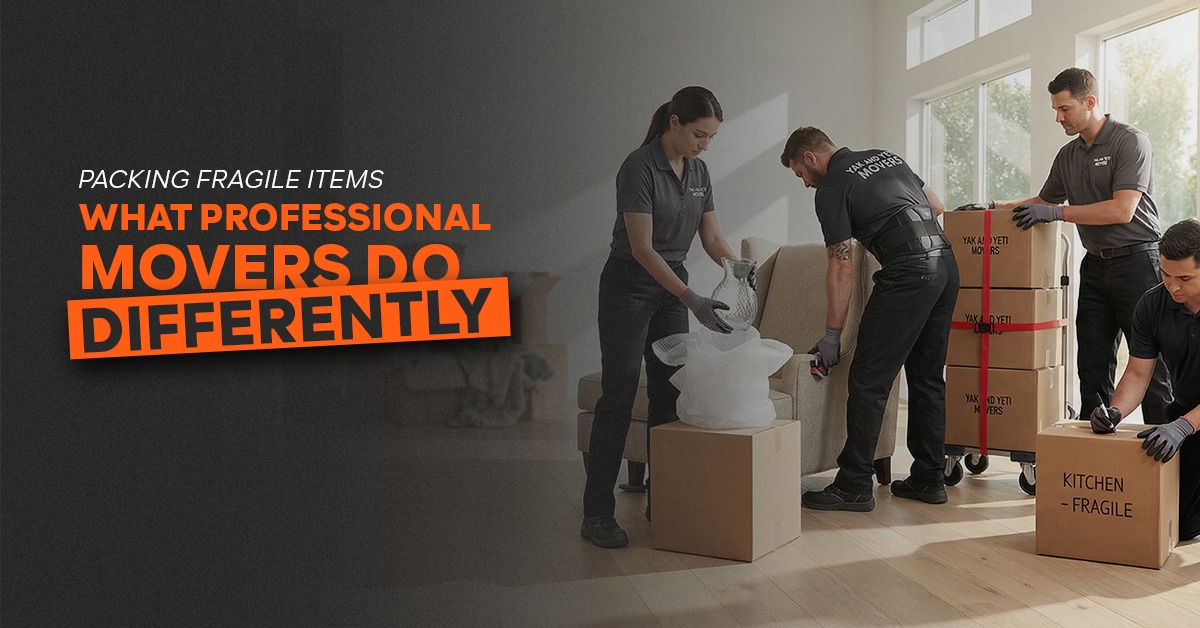
When it comes to packing fragile items, most people grab some bubble wrap, cross their fingers, and hope for the best. But if you’ve ever opened a box to find your grandmother’s china in pieces, you know that hope alone is not a packing strategy.
What separates a professional mover from the rest isn’t just muscle. From the materials they choose to how they load the truck, professional movers follow a precise system when it comes to fragile packaging that most people have never even heard of. In this guide, we break down exactly what the pros do differently, so your most delicate belongings arrive at your new home in one piece.
Why Fragile Items Need Special Attention
Not all packing is created equal. When packing fragile items, damage mainly occurs in three situations: fragile items bumping against each other in the box, a box being dropped or mishandled, and items shifting during transport.
Moving to a new home is exciting, but transporting fragile heirlooms and delicate possessions can be nerve-wracking; one wrong bump and years of memories could be shattered. The good news is that with the right packing materials and techniques, you can greatly reduce the risk of damage.
Whether you’re moving across the Bay Area or just down the street, understanding how professionals approach packing fragile items gives you a massive advantage.
1. They Start With the Right Materials — Not Just Bubble Wrap
Most people assume bubble wrap is the gold standard. Professionals think differently.
Start by gathering high-quality packing materials, including smaller boxes, packing tape, paper bubbles, and padding like packing paper or foam. Bubble wrap is a popular choice, but paper bubbles and foam are also excellent alternatives. For eco-conscious options, consider reusable cloth or biodegradable packing materials.
Avoid using newspapers for wrapping ink that can transfer and stain delicate surfaces. This is one of the most common DIY mistakes that professionals never make.
Spending money on proper materials now prevents the expense and frustration of replacing broken heirlooms and valuables later.
At Yak & Yeti Movers, the team uses professional-grade materials, including sturdy boxes, bubble wrap, shrink wrap, and proper padding for every move because the right supplies are the first line of defense for your fragile items.
2. They Choose the Right Box for the Right Item
Professional movers don’t just grab the nearest cardboard box. They match the box to the item.
Choose boxes specifically designed for fragile items rather than standard cardboard alternatives. Dish Pack Boxes have reinforced cardboard construction that withstands the weight of multiple plates and bowls. Mirror Boxes are adjustable flat boxes that accommodate various sizes of artwork and mirrors. Cell Dividers are cardboard inserts that create individual compartments for glassware and stemware. Double-Wall Construction provides extra-thick cardboard for superior protection of valuable items.
Big boxes may seem efficient, but for fragile items, smaller boxes are often safer. They’re easier to carry, less likely to be dropped, and better at minimizing interior shifting. Smaller boxes also help save space in the truck, allowing movers to pack more strategically.
3. They Always Line the Box Before Packing Anything
Here’s something most people skip entirely, and it costs them.
Separate heavier items from delicate ones and line each box with cushioning before placing anything inside.
Before placing items inside, line the bottom of the box with crumpled packing paper or foam padding to create a cushioned base. This initial layer absorbs shock and provides a stable foundation for your fragile items. It takes less than a minute and can prevent a lot of heartbreak.
4. They Wrap Every Single Item Individually
This is the rule professionals never break when it comes to fragile packaging: one item, one wrap.
Packing glassware? Always use cardboard dividers or foam inserts in a sturdy cardboard box. These create separate compartments that keep fragile items from knocking into each other. It’s especially helpful for things like wine glasses, champagne flutes, and stemware, which are tall, top-heavy, and prone to tipping inside a box. Each individual item should be wrapped separately before being placed into a divided space.
When using bubble wrap, make sure the bubbles face inward toward the item for better cushioning. Most people wrap with the bubbles facing outward, another common mistake the pros avoid.
5. They Pack Plates Vertically — Not Flat
This one surprises most people, but it’s one of the most important techniques in packing fragile items.
Plates should be stacked vertically, not flat. Glasses should be wrapped individually and placed upright.
Plates and bowls require extra care because of the way they stack in boxes. Place a plate down, then a layer of foam or thin bubble wrap, and place another dish. When plates are packed vertically like records in a crate, pressure distributes more evenly and the risk of cracking drops dramatically.
For kitchens with a lot of china or glassware, Yak & Yeti’s professional packing and unpacking services handle every piece with this exact technique, so nothing arrives broken.
6. They Document Everything Before Packing
Professional movers are systematic; they don’t just pack, they record.
Photograph valuable items before packing for insurance and inventory purposes. Create detailed records of packed fragile items, including their pre-move condition.
First, make a detailed inventory of what sort, separate, organize, and assess the fragility level of every delicate item. This step protects you if anything goes wrong and makes the unpacking process far more organized.
7. They Fill Every Gap — No Empty Space Allowed
Movers double-wrap fragile items, layer heavier objects at the bottom and lighter ones on top, and fill gaps with packing paper, foam peanuts, or air cushions to prevent shifting during transit.
The more empty space you leave in a box, the more likely your items will shift or collide during transport. After placing all items, professionals give the box a gentle shake. If anything moves, they add more padding until the contents are completely secure.
8. They Seal and Label Boxes Properly on Every Side
After sealing, be sure to label every side of the box with “FRAGILE” in bold, visible letters. Don’t just write it on the top boxes, get rotated and stacked, and your movers need to know what’s inside at a glance. Use directional arrows and “This Side Up” notes, especially for boxes with glass or top-heavy pieces.
When labeling, make sure to use thick and opaque markers. Mark in as many places as you can. Make your labels big, clear, and legible. Use simple cues like “heavy,” “electronics,” and “extremely fragile.”
This is especially important when working with a team of residential movers. Clear labels ensure every box is handled with the right level of care from the moment it’s picked up.
9. They Have a System for Artwork and Mirrors
Artwork and mirrors are two of the most awkward items to move and two of the most commonly broken.
Apply painter’s tape in an “X” across the glass, cover with foam board or cardboard, wrap in bubble wrap, and place upright in a specialty mirror box. For larger artworks or mirrors, professional movers use moving blankets to protect them during transit.
Use sturdy crates or padded blankets for added security. Avoid placing heavy items on top of large, delicate objects. Place heavier items at the bottom and lighter ones on top for optimal weight distribution.
10. They Are Careful About How the Truck Is Loaded
Great fragile packaging means nothing if the truck is loaded wrong. This is where most DIY moves fall apart.
Fragile items are loaded last, after heavier, sturdier pieces are placed at the bottom to create a solid foundation. This keeps breakables away from pressure points and prevents them from being buried beneath furniture or appliances. They’re usually positioned near the door, so they’re quick to unload and handle less overall. Movers then strap or tie down each fragile item, using padded barriers and support straps to keep them from tipping or sliding. Items like mirrors, glass panels, and TVs are placed vertically and braced from both sides.
A common mistake is placing fragile boxes under heavier loads. This creates pressure that can crush or damage delicate belongings.
11. They Use Custom Crating for High-Value Items
For truly irreplaceable items, professional movers go beyond boxes entirely.
For items requiring extra care, professional movers offer custom crating services. These are ideal for antiques, artwork, pianos, and even pool tables. Custom-built crates provide maximum protection for especially delicate or valuable pieces.
Oversized fragile items require specialized attention and are often best handled by experienced movers trained in custom crating and advanced protection techniques.
Yak & Yeti’s team offers specialty item protection for everything from antique mirrors to grand pianos, moving all handled through their expert services.
12. They Keep Valuables Off the Truck Entirely
Some items are simply too important to risk.
Consider securing insurance for high-value, fragile items — this protects against unexpected damage. For extra protection, consider double-boxing valuables to add an extra layer of protection for expensive or irreplaceable items.
Professional movers will always advise clients to personally transport jewelry, important documents, and truly irreplaceable heirlooms rather than placing them on the moving truck. This is a non-negotiable packing fragile items rule that the pros live by.
13. They Communicate With the Whole Crew
Packing well is only half the battle. The other half is making sure everyone on the team knows what needs extra care.
Communication is just as important as packing materials. Movers need to know which boxes hold fragile items so they can handle them with the right level of care. Labels, arrows, and verbal reminders all help reduce the risk of mishandling. When movers are informed, fragile belongings are far more likely to arrive in perfect condition.
How Yak & Yeti Movers Handle Fragile Items
At Yak & Yeti Movers, protecting fragile items isn’t an afterthought; it’s part of every move. As one of the most trusted moving companies in the Bay Area, the team brings:
- Professional-grade packing materials — bubble wrap, foam padding, shrink wrap, dish packs, and specialty boxes
- Expert wrapping techniques — every fragile item is individually wrapped and secured
- Strategic truck loading — fragile items loaded last, positioned near the door, and properly strapped
- Specialty item handling — antiques, artwork, mirrors, and pianos treated with extra care
- Full insurance coverage — your belongings are protected throughout the entire move
- Custom packing services — tailored to your home and your unique fragile items
Conclusion
The difference between a broken keepsake and a perfectly intact delivery comes down to one thing: method. Professional movers don’t just pack faster, they pack smarter. From choosing the right box and wrapping every item individually, to loading the truck in the correct order and clearly communicating with the crew, every step of their process is designed to protect your fragile items.
If you’d rather leave packing fragile items to the experts, Yak & Yeti Movers are here to help. Contact them today for a free, no-hidden-fee quote and move with complete peace of mind.
FAQs
What is the best packing material for fragile items?
Packing paper, foam padding, and bubble wrap (bubbles facing inward) are the most reliable materials. Avoid newspapers; the ink can stain delicate surfaces.
Should I wrap every fragile item individually?
Yes. Professional movers always wrap each item separately to prevent items from knocking into each other inside the box.
How should plates be packed for moving?
Plates should always be packed vertically, like records in a crate, never flat. Each plate should be wrapped individually with a layer of padding between each one.
Where should fragile boxes be placed in the moving truck?
Fragile boxes should be loaded last and placed near the truck door, away from heavier items, and secured with straps to prevent shifting.
Should I hire professional movers to pack fragile items?
If you have valuable, delicate, or irreplaceable items, hiring professionals like Yak & Yeti Movers is strongly recommended. Their trained team uses expert techniques and provides insurance coverage for added peace of mind.