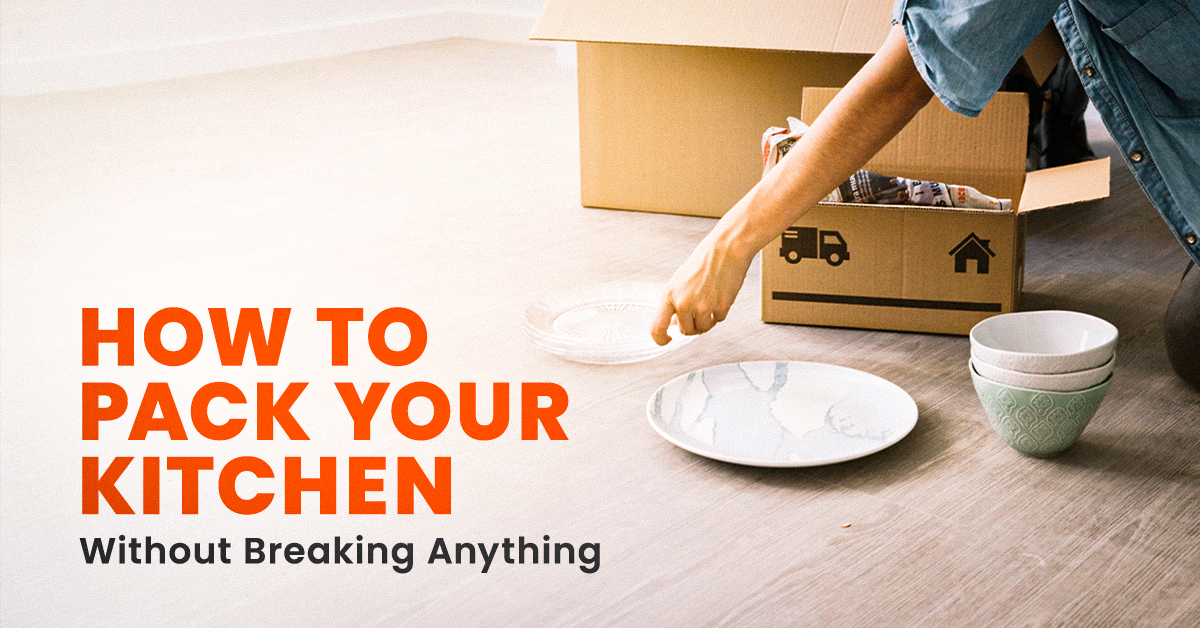
The kitchen is the hardest room to pack for moving, and every professional mover will tell you the same thing. It has the most fragile items, the most awkward shapes, the heaviest appliances, and the longest list of things that can go wrong. One box is packed the wrong way, and you’re arriving at your new home to the sound of broken glass.
But here’s what most people don’t realize: professional movers don’t just work faster, they work smarter. They follow a set of tried-and-tested techniques that protect everything from your everyday mugs to your most delicate stemware.
In this guide, we’re sharing those exact techniques so you can pack your kitchen for moving the right way without losing a single dish.
The “Declutter First” Rule Professionals Never Skip
Before a professional mover touches a single cabinet, they insist on one thing: get rid of what you don’t need.
Take everything out of your cabinets, drawers, and pantry and categorize items into three groups: keep, donate, or discard. A good benchmark is a year: if you haven’t used an appliance or tool within that time, consider letting it go.
The less you pack, the less that can break and the faster your new kitchen comes together.
The Vertical Plate Rule
Ask any professional mover how to pack a kitchen for moving and the first thing they’ll mention is this: plates go vertical, not flat.
Place plates vertically in the box like records, reducing the risk of damage. Wrap each plate individually with packing paper or foam sheets for protection. Tuck towels or linens around the plates to add extra cushioning.
Put one dish in the center of the packing paper and fold one corner over the top. Place the next dish on top and repeat the process until you have a bundle. Then wrap the other corners and pack the bundle vertically in your box. It’s okay to pack some items in bundles, but you should individually wrap fragile items like china.
This single technique alone eliminates the most common cause of broken dishes during a move.
The Right Way to Pack Glasses for Moving
Packing glasses for moving especially wine glasses and stemware is where most people run into the most trouble. Stems are delicate, rims chip easily, and standard boxes offer almost no protection without the right setup.
Invest in dividers that fit into standard size moving boxes. Wrap each piece in packing paper and gently insert them into the divider. Do not pack anything on top of your glasses. Fill any empty space with dish towels, crumpled packing paper, or plastic grocery bags.
Place glasses upright in the box, filling any gaps with crumpled paper and securing them with tape. Always label the box “FRAGILE GLASSWARE” with an upward-facing arrow on every side.
For a deeper look at protecting all your breakables beyond just glassware, read our full guide: Packing Fragile Items: What Professional Movers Do Differently.
The Smart Way to Handle Pots, Pans, and Cookware
Heavy cookware might not break, but pack it wrong and it damages everything around it.
Stack pots and pans into a medium or large box with the smaller ones nestled into the larger ones, with a sheet of packing paper between them. Glass lids should be wrapped in packing paper, bubble wrap, or thick towels then placed around the pots and pans or packed in a separate box. Fill any empty space with crumpled packing paper, dish towels, or plastic grocery bags to keep the contents from shifting.
For pots and pans with long handles, wrap them with bubble wrap to protect against bending or breaking. Always pack cookware in medium boxes large boxes filled with cast iron or dutch ovens become impossible to lift safely.
The Appliance Secret Most People Miss
Small appliances have odd shapes that make them tricky but professionals have a system for those too.
Take apart your small kitchen appliances so nothing gets broken in transit. Kitchen appliances have odd shapes, but that doesn’t mean you have to use extra boxes. Put several individually wrapped appliances in the same box if possible. If there isn’t space, fill in the gaps with other kitchen supplies like cereal boxes or measuring cups.
Keep all the parts together in a labeled bag or container. Use bubble wrap, foam sheets, or packing paper to wrap each component of the appliance. Pay special attention to any fragile or delicate parts, such as glass jars or mixer attachments.
When available, always reuse original product packaging from manufacturers for perfect-fit security and padding durability.
How to Deal With Large Appliances
Large appliances like your fridge and stove need early preparation, not last-minute scrambling.
Pull the plug on your refrigerator a full day or two before the movers arrive. This gives it plenty of time to defrost completely and dry out.
The stove has a lot of attached pieces you need to remove, like racks, knobs, and coils. If you have a gas stove, make sure to turn off the gas before disconnecting it. Use moving blankets to protect appliances from scratches and damage during transport.
For heavy appliances that require special equipment and handling, Yak & Yeti Movers’ loading and unloading services take care of every large appliance safely, with no injuries or damage.
The Labeling System That Saves Hours at Unpacking
Label each box clearly with its contents and handling instructions. Mark boxes with words like “Fragile” for glassware or “Pots and Pans” for heavier items. Clear labeling helps movers handle your belongings carefully and ensures easier unpacking in your new kitchen.
Use dividers to keep plates and glassware separated to prevent chipping, and label each utensil box for easy unpacking.
Write on multiple sides of every box, not just the top. When boxes are stacked, the sides are the only thing anyone can see.
The Essentials Box: The Most Important Box You’ll Pack
Leave out some essentials like plates, utensils, cups, bowls, a can opener, and snacks, as well as a dish towel, dish soap, a sponge, and any crucial appliances.
Begin with items you rarely use about two weeks before moving day. Pack your everyday dishes, pots, and utensils during the last couple of days, and set aside a box of essentials for your first night.
Load this box last so it comes off the truck first. Your first meal in your new home will thank you.
How Yak & Yeti Movers Pack Your Kitchen Differently
Most people spend days stressing over bubble wrap and boxes when it comes to packing a kitchen. Yak & Yeti Movers do it in hours and they do it better. As one of the most trusted moving company in the Bay Area, their team doesn’t just throw things in boxes and hope for the best. Every dish is individually wrapped, every glass gets its own divider, every appliance is secured before it’s loaded.
What really sets Yak & Yeti apart is the attention to detail. Plates are packed vertically, stemware goes upright in divided boxes, knives are safely wrapped and clearly labeled, and large appliances are prepped and protected before they ever reach the truck. Their packing and unpacking services are fully tailored to your home, whether you have a small apartment kitchen or a large family kitchen packed with china, cookware, and appliances.
Conclusion
Packing a kitchen the right way comes down to three things: the right materials, the right techniques, and the right mindset. Declutter before you pack, wrap every fragile item individually, stand your plates on their edge, use dividers when you pack glasses for moving, label every single box on multiple sides, and always set aside an essentials box for moving at night.
Follow these professional tips, the same ones used by Yak & Yeti Movers on every move, and your kitchen will arrive at your new home exactly as it left: intact, organized, and ready to use.
FAQs
What is the best way to pack a kitchen for moving?
Declutter first, gather professional-grade materials, pack room by room starting with the least-used items, wrap all fragile items individually, and set aside an essentials box for your first night.
How do you pack glasses for moving without breaking them?
Use specialty box dividers, wrap each glass individually in packing paper, place glasses upright, fill all gaps with crumpled paper, and label the box “FRAGILE” with an upward arrow on every side.
Should plates be packed flat or vertically?
Always vertical like records in a crate. Plates packed flat crack far more easily under the pressure and movement of transit.
How do I pack kitchen appliances for a move?
Disassemble where possible, use original packaging if available, wrap each component individually in bubble wrap, keep all parts together in a labeled bag, and pack in medium boxes with padding.
Can Yak & Yeti Movers pack my kitchen for me?
Absolutely. Their expert packing and unpacking services handle everything from fragile glassware to large appliances, fully insured and tailored to your home’s needs.